
09:00am to 05:00pm
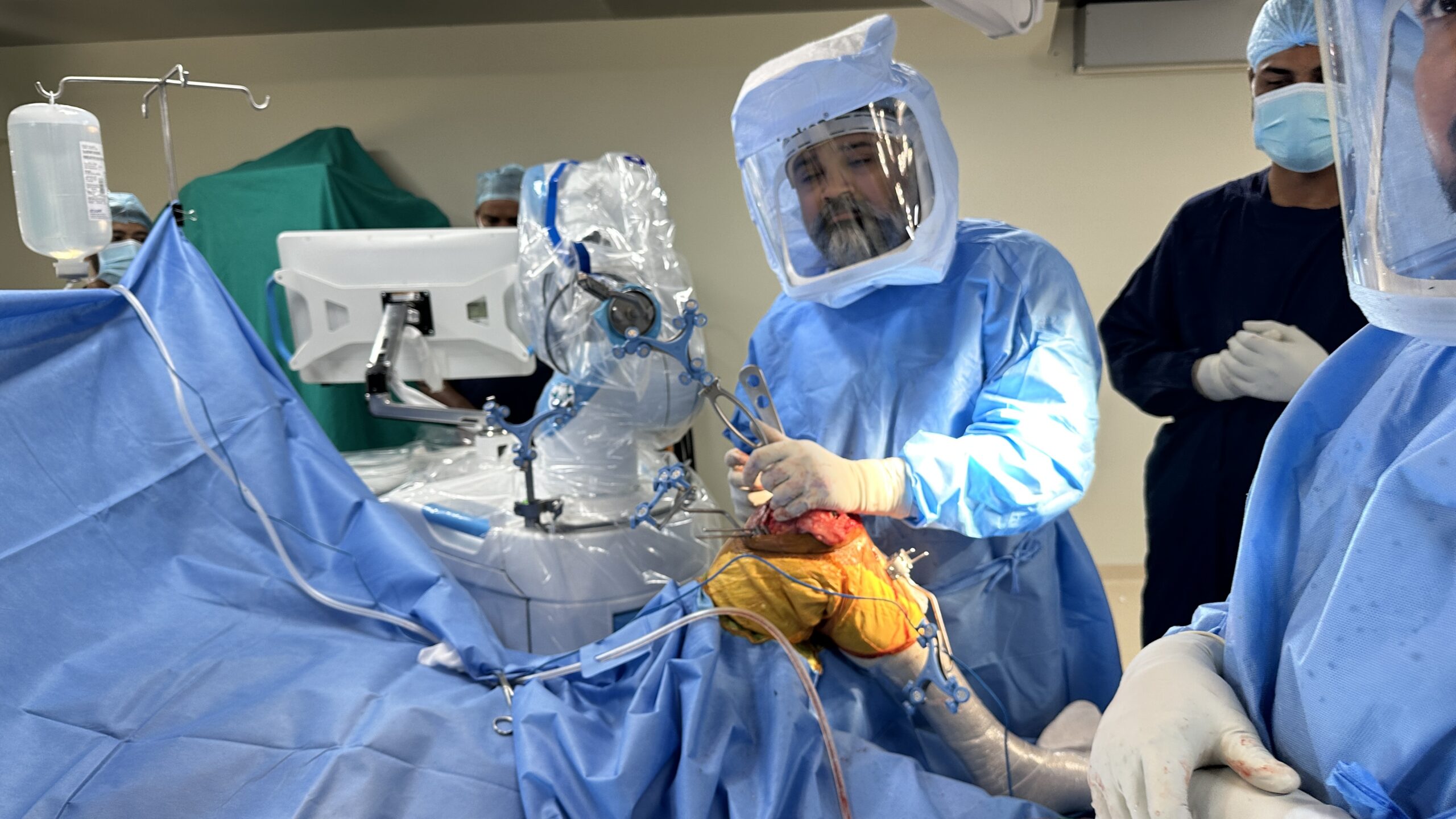
Chronic knee pain caused by arthritis or severe joint damage can significantly impact your daily life, making simple activities such as walking, climbing stairs, or standing for long periods difficult. While traditional knee replacement surgery has helped millions of patients worldwide, advancements in orthopedic technology have introduced Robotic Total Knee Replacement, offering greater precision, personalized surgical planning, and improved patient outcomes.
Robotic-assisted knee replacement combines the expertise of an experienced orthopedic surgeon with advanced robotic technology to achieve highly accurate implant placement. Contrary to common misconceptions, the robot does not perform the surgery independently. Instead, it acts as a sophisticated guidance system that assists the surgeon in planning and executing every step with exceptional precision.
Dr. B. Sai Phani Chandra specializes in modern robotic-assisted knee replacement procedures, providing patients with advanced orthopedic care, improved joint function, reduced pain, and faster recovery.
Robotic Total Knee Replacement is an advanced form of knee replacement surgery that uses robotic-assisted technology to enhance surgical accuracy.

Stronger Results
10+ years strong
Before surgery, detailed imaging of the patient’s knee is used to create a three-dimensional model of the joint. This allows the surgeon to:
During the procedure, the robotic system provides real-time guidance, allowing the surgeon to make highly precise bone cuts and accurately position the implants.
This level of accuracy may contribute to better joint function, improved implant longevity, and enhanced patient satisfaction.
Robotic-assisted knee replacement may be recommended for individuals who experience:
A detailed orthopedic evaluation, including physical examination and imaging studies such as X-rays or CT scans, helps determine whether robotic-assisted surgery is the right option.
Robotic Total Knee Replacement is commonly performed for:
Early treatment helps restore mobility and prevents further deterioration of the joint.
Robotic technology offers several important benefits compared to conventional techniques.
01
The robotic system helps achieve highly accurate implant positioning based on the patient’s individual anatomy.
02
Every knee is unique. Robotic planning allows the procedure to be customized for each patient rather than using a one-size-fits-all approach.
03
Proper alignment helps restore natural knee movement and may improve the longevity of the implant.
01
The technology assists the surgeon in preserving healthy ligaments and surrounding tissues whenever possible.
01
Only the damaged portions of the joint are removed, helping preserve healthy bone.
01
Accurate balancing of the knee may result in smoother movement and better function.
01
Many patients experience quicker rehabilitation and improved confidence during recovery.
01
Accurate implant positioning may contribute to better long-term outcomes and patient satisfaction.
The procedure follows several carefully planned steps:
The patient’s symptoms, medical history, X-rays, and advanced imaging are reviewed.
A 3D model of the knee is created, allowing precise planning before surgery.
During surgery, the robotic system provides real-time guidance while the surgeon performs every surgical step with precision.
Artificial knee components are positioned according to the personalized surgical plan.
The surgeon verifies joint stability, movement, and implant alignment before closing the incision.
The surgery generally takes 60–90 minutes, depending on the complexity of the case.
Recovery begins shortly after surgery with early mobilization and physiotherapy.
Most patients can expect:
A personalized rehabilitation program is essential to maximize mobility, strengthen the muscles around the knee, and support long-term success.
Choosing the right orthopedic surgeon is just as important as selecting the appropriate surgical technique. Dr. B. Sai Phani Chandra is committed to delivering evidence-based orthopedic care with a strong focus on patient safety, precision, and long-term outcomes.
Patients trust Dr. Sai Phani for:
Every patient receives individualized care designed to achieve the best possible functional outcome.
No. The surgery is performed by the orthopedic surgeon. The robotic system provides guidance and assists with precision but does not operate independently.
Robotic-assisted surgery offers enhanced precision and personalized planning. Your surgeon will determine the most appropriate technique based on your condition.
Modern knee implants generally last 15–20 years or longer, depending on factors such as activity level, overall health, and proper post-operative care.
Most patients begin walking with assistance within 24 hours after surgery as part of their rehabilitation program.
Yes. Physiotherapy is a key component of recovery, helping restore strength, flexibility, balance, and knee function.
If knee pain is limiting your ability to enjoy everyday life, Robotic Total Knee Replacement may provide the precision and long-term relief you need. Early evaluation can help determine the most appropriate treatment based on your individual condition.
Book an appointment with Dr. B. Sai Phani Chandra today to explore advanced robotic-assisted knee replacement surgery and take the first step toward improved mobility, reduced pain, and a more active lifestyle.

Copyright © 2026 All Rights Reserved.